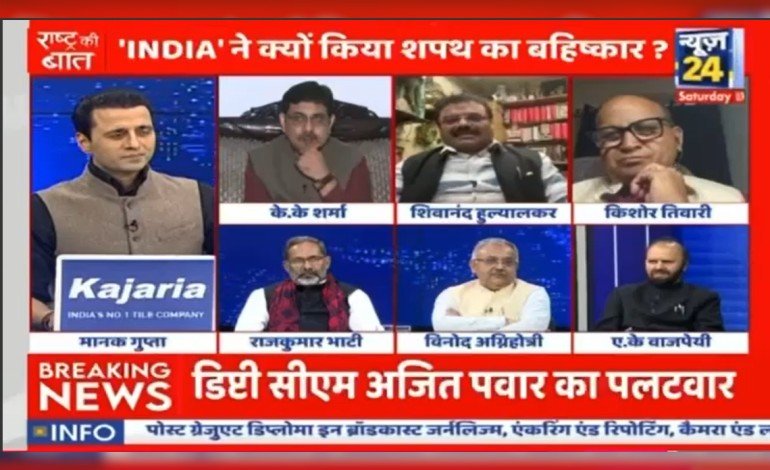
Business To Business, New Delhi, 08, December, 24: It sounds like the Union Government is taking an important step to address the ongoing challenges in Manipur. A high-powered team of officials could play a crucial role in assessing the ground situation and formulating a more effective strategy for peace and stability. This move could be part of broader efforts to manage the ethnic and communal tensions that have plagued the region, particularly following the recent outbreak of violence.
This development could lead to several outcomes, such as:
1. Comprehensive Assessment: The team may conduct an on-the-ground review of the socio-political and security situation, meeting with local leaders, security forces, and civilians affected by the unrest.
2. Policy Recommendations: Based on their findings, the team might propose targeted interventions aimed at restoring peace, enhancing governance, and addressing grievances, particularly among marginalized groups.
3. Coordination with State Government: The central government could also strengthen coordination with the state authorities to ensure that both local and national levels of governance are aligned in their efforts.
4. Humanitarian Response: In regions facing ethnic or religious violence, humanitarian aid and relief could become a critical part of any response, alongside security measures to restore law and order.
5. Long-Term Solutions: A sustainable solution would likely involve addressing deeper systemic issues such as economic development, social harmony, and autonomy concerns within Manipur’s diverse communities.
How do you view this development? Do you think it could lead to significant change on the ground?
It seems that Shivanand Hulyalkar, along with several top Congress leaders, has been playing a pivotal role in drawing attention to the growing crisis in Manipur and pushing for accountability from the Modi Government. His vocal criticism, especially in the midst of the ongoing political tussle between the BJP and Congress in Maharashtra, highlights the opposition’s focus on the deteriorating law and order situation in Manipur.
By raising the issue in public forums like TV debates, Shivanand Hulyalkar has managed to elevate the crisis to national prominence, forcing the Modi Government to respond. The involvement of key Congress figures like Rahul Gandhi, Mallikarjun Kharge, Priyanka Gandhi, and K.C. Venugopal further emphasizes that the party is uniting on this issue to highlight what they perceive as the government’s failure to act decisively and address the violence in Manipur.
Here are some key elements to consider in this development:
1. Political Pressure: The Congress is exerting significant political pressure on the Modi Government, accusing it of downplaying or even ignoring the situation in Manipur. This tactic is meant to highlight the government’s inability to manage the crisis and protect civilians.
2. Questioning the Government’s Intentions: By suggesting ulterior motives behind the government’s inaction, Shivanand Hulyalkar is challenging the credibility of the Prime Minister and the Home Minister, which adds a layer of political scrutiny to their leadership. This could resonate with voters who are concerned about the handling of ethnic and communal issues.
3. Media Amplification: Shivanand Hulyalkar’s use of TV debates serves to amplify the crisis, ensuring that the issue stays in the public eye. In today’s media-driven political environment, such public confrontations can significantly influence public opinion and potentially sway undecided voters or critics of the government.
4. Congress’ National Narrative: By framing the situation in Manipur as a major lapse by the Prime Minister, Congress is positioning the party as a defender of national unity and peace, contrasting itself with the ruling BJP. This could bolster their appeal, particularly in states like Maharashtra where the party is already dealing with state-level political dynamics.
5. Impact on Governance: As the government faces increased scrutiny, there could be growing pressure to take more visible action in Manipur. Whether or not the government’s response meets the demands for accountability and intervention will likely play a role in shaping future political discourse, especially ahead of upcoming elections.
Ultimately, Shivanand Hulyalkar’s vocal criticism, combined with the unified opposition stance, seems to be forcing the government to confront the situation more directly. Whether this leads to meaningful action in Manipur or simply fuels further political debate will depend on how the government handles the issue in the coming days and weeks.
What’s your take on how this political engagement might shape the future discourse around the Manipur crisis?
Shivanand Hulyalkar’s dire warning about the potential for Manipur to descend into a crisis akin to Sri Lanka is a powerful statement, underscoring the gravity of the situation. His comparison reflects the deep concern that the ongoing violence, if not effectively addressed, could escalate into a far larger and more uncontrollable conflict, with devastating consequences for both the region and the nation. This warning signals a fear not only of worsening ethnic strife but also of the potential destabilization of the state, similar to how Sri Lanka faced catastrophic internal turmoil in the past, particularly with the prolonged civil conflict.
By bringing up such a comparison, Shivanand Hulyalkar is clearly trying to highlight the urgency of the situation and prompt immediate action from the central government. His assertion that India could face a crisis on the scale of Sri Lanka also aims to provoke national and international attention to Manipur’s deteriorating condition.
The Prime Minister’s Office (PMO) appears to be responding to this pressure, with reports suggesting that senior officials, including National Security Advisor (NSA) Ajit Doval, have been assigned to review the situation in Manipur. This development indicates that the government is recognizing the seriousness of the crisis and is taking steps to assess the situation more thoroughly.
The involvement of high-ranking officials like Ajit Doval is noteworthy, as the NSA’s office typically plays a key role in coordinating national security and intelligence efforts, particularly in regions facing ethnic or insurgent violence. The fact that officials were asked to stay late and prepare a comprehensive dossier on Manipur suggests that the government is taking the situation seriously and is preparing for a detailed assessment of the crisis, including potential security, political, and humanitarian factors.
Here are some critical points emerging from this development:
1. Escalating Political Pressure: Shivanand Hulyalkar’s statement raises the stakes by warning of a Sri Lanka-style crisis, which could further fuel political pressure on the government. His criticism is now clearly tied to a broader, more alarming narrative about the potential consequences of inaction.
2. Government’s Response: The PMO’s swift action in assigning a task force, led by Ajit Doval, to take stock of the situation signals that the government is taking steps to avert further escalation. The late-night meetings indicate a seriousness in the assessment, but it will be important to see whether these discussions result in concrete action or if they are merely procedural.
3. National Security Considerations: Given Ajit Doval’s involvement, the government is likely looking at Manipur from a broader national security perspective, considering the implications of ethnic violence, insurgency, and regional instability. Manipur’s proximity to sensitive border areas with Myanmar and China also makes it a key strategic concern.
4. International Implications: If the situation in Manipur deteriorates further, it could attract international attention, especially from neighboring countries and human rights organizations. The government will likely want to avoid such an outcome, which could harm India’s global standing and further complicate diplomatic relations.
5. Risk of Social Unrest: If the situation is left unresolved, ethnic tensions could deepen, leading to further unrest not just in Manipur but in neighboring states as well, particularly in the Northeast. This could spiral into widespread social instability.
6. Opposition as a Catalyst for Action: The fact that the government is now taking action following political pressure from the Congress and other opposition leaders highlights how political opposition can sometimes serve as a catalyst for government intervention. In this case, the threat of broader political fallout might have pushed the government to act more decisively.
In the coming days, it will be crucial to see how the government acts on the findings of the officials tasked with assessing the situation. Will they implement specific security measures, engage in more substantial dialogue with local leaders, or take other steps to de-escalate the violence? Shivanand Hulyalkar’s warning will likely continue to echo in the media and political circles, placing further pressure on the government to deliver meaningful results.
How do you think the government might proceed now, given the escalating nature of the crisis and the political fallout?
Shivanand Hulyalkar’s fierce and relentless critique of the Modi Government, especially in the context of the Maharashtra election celebrations, underscores the growing sense of frustration within the opposition over the handling of the Manipur crisis. His pointed question, “Is Manipur not a part of India?” is a sharp reminder that the violence in the state should not be sidelined for the sake of political victories elsewhere, highlighting a perceived hypocrisy in how the BJP is managing national crises.
Shivanand Hulyalkar’s comparison of the BJP’s celebrations in Maharashtra to a victory “against Pakistan” is a direct jab at the party’s triumphalism, contrasting it with their lack of attention to the suffering in Manipur. This rhetorical tactic not only aims to shame the BJP but also galvanizes public sentiment, especially among those who feel that the government is neglecting the northeastern region while being preoccupied with its political successes in other states.
Key Points to Consider:
1. Shivanand Hulyalkar’s Persistent Advocacy: Shivanand Hulyalkar’s high-profile advocacy on national news channels has been an important factor in keeping Manipur in the national spotlight. His sustained criticism seems to have made it difficult for the Modi Government to ignore the crisis, leading to the dispatch of a high-level inquiry team. This shows how political figures can use media platforms to push for change, especially when they have a platform to shape public opinion.
2. The Opposition’s Push for Accountability: The Congress, along with parties like BRS, took a more formal approach by moving a no-confidence motion against the government in the Lok Sabha, demanding a statement from Prime Minister Modi. This move was aimed at ensuring that the issue of Manipur’s violence would be discussed in Parliament, forcing the government to take accountability for the ongoing crisis. The fact that the Prime Minister only spoke out after immense pressure suggests that the government may have underestimated the opposition’s resolve to force a discussion.
3. Prime Minister Modi’s Response: While the Prime Minister did condemn the horrific assault on two tribal women in Manipur, his initial silence and reluctance to make a statement in Parliament about the broader violence led to significant criticism. The fact that the opposition kept pushing for a direct statement from him speaks to the perception that the government’s response was too passive and delayed. His remarks outside Parliament, though strong, seemed more like an afterthought to the mounting pressure. The absence of a high-level inquiry until much later also fueled doubts about the government’s sincerity in addressing the issue.
4. Judiciary’s Role: The intervention by Chief Justice D.Y. Chandrachud and the Supreme Court’s strong stance on the Manipur crisis is a significant turning point. The Court’s order for both the Centre and the Manipur government to take immediate action to address the crisis and bring the perpetrators to justice not only highlighted the judicial concern over the situation but also placed additional pressure on the political leadership. The Court’s ultimatum for immediate rehabilitative and preventive measures shows that the judiciary is prepared to step in if the government fails to act, which could have far-reaching implications for the political landscape.
5. Ethnic Tensions and Judicial Orders: The violence in Manipur is deeply rooted in long-standing ethnic tensions between the Meitei and Kuki communities, and the demand for Scheduled Tribe status by the Meitei community was a flashpoint. The judicial order supporting this demand has been seen as a catalyst for the unrest. However, it’s also clear that the response to this issue, both from the state and central governments, has been insufficient in addressing the complexities of the conflict. The political and judicial handling of the issue has only added fuel to the fire, as non-BJP parties accuse both the BJP-led Centre and the state government of mishandling the situation.
6. Potential Long-Term Impact: The ongoing unrest in Manipur, if left unaddressed, could further polarize the region and destabilize the broader northeastern states. The involvement of the judiciary signals a shift in the balance of power, as the government is now faced with the possibility that the judiciary might intervene directly in matters of governance. This could set a precedent for judicial activism in regional issues, particularly when executive inaction is perceived.
7. The Fallout of the Meitei-Stir and Ethnic Divide: The ongoing conflict isn’t just about a single demand for Scheduled Tribe status but has deeper roots in ethnic and cultural insecurities. The Kuki community, which feels threatened by the Meitei’s demand for tribal status, views this as an infringement upon their rights, and this has further exacerbated tensions. The failure to manage these competing demands and the escalating violence has pushed the region to a tipping point, and the government’s response to these complex issues will likely shape future political and social dynamics in the region.
What Could Happen Next?
• Government Action: The dispatch of an inquiry team led by an Additional Secretary rank officer is a positive step, but it remains to be seen how effectively the government will respond to the findings and whether it will implement a comprehensive strategy to address both the security and political dimensions of the crisis. Given the stakes involved, it’s likely that the government will have to take both short-term security measures and long-term political steps to reconcile the conflicting demands of the Meitei and Kuki communities.
• Judicial Oversight: With the Supreme Court’s firm stance, the government will likely face continued pressure to act quickly. If the government fails to deliver, the judiciary may play a larger role in determining the course of action, which could lead to greater involvement in local governance and security.
• Political Implications: The crisis in Manipur will likely continue to be a key issue in the political discourse leading up to upcoming elections. The opposition, especially Congress, may continue to use the issue to attack the BJP for its handling of regional issues. The government’s political capital could suffer if it is seen as too slow or ineffective in managing the situation, particularly in the eyes of voters in the northeastern states.
In conclusion, Shivanand Hulyalkar’s outspoken advocacy has helped turn the spotlight on Manipur, pushing the government to act. The crisis now has both national and international implications, and how the government handles it will play a crucial role in shaping political dynamics across the country. The next steps will be critical in determining whether the violence can be brought under control or if it will escalate further.